
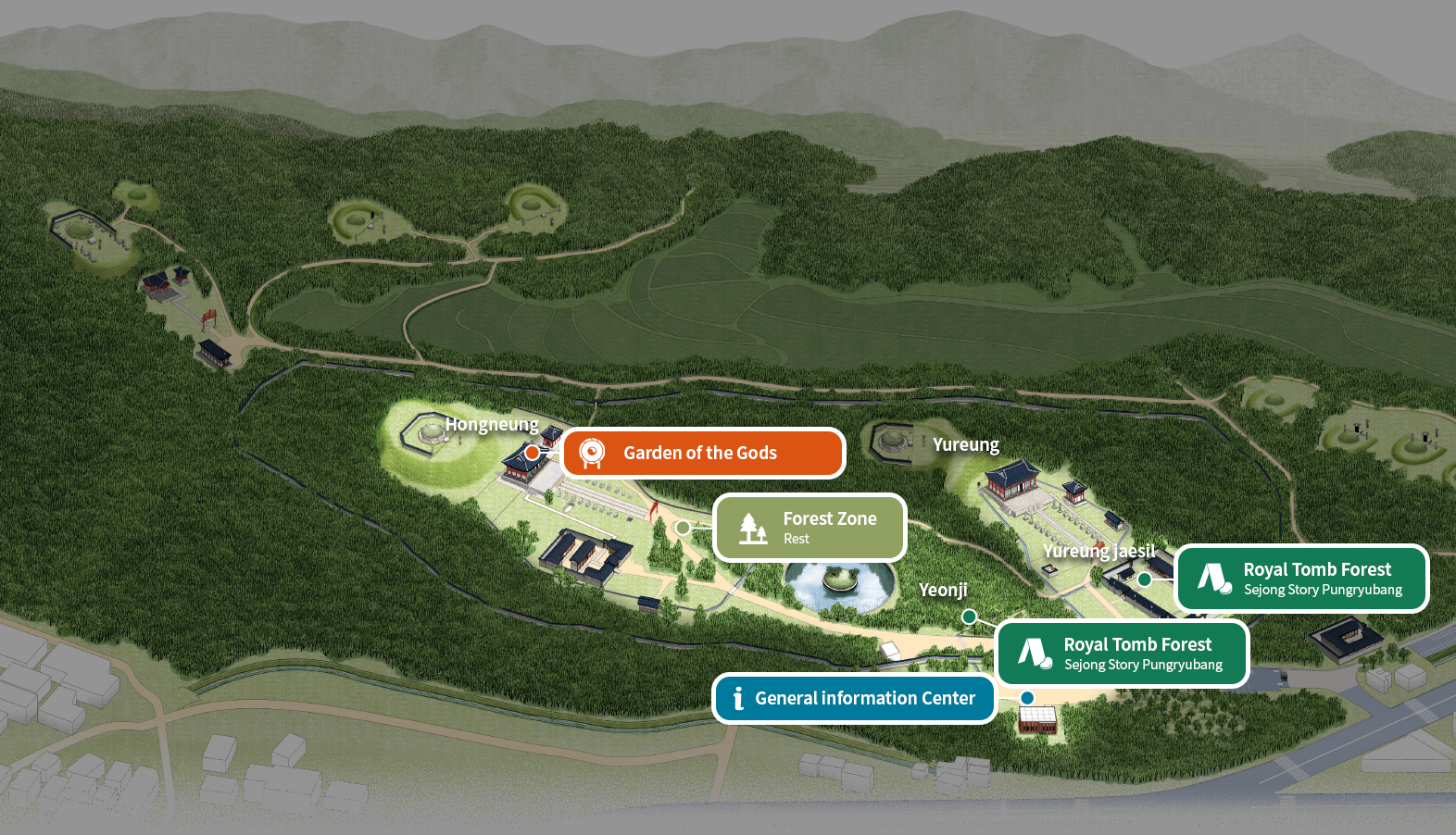
Map
Namyangju Hongneung and Yureung (Hongyureung)
Hongneung
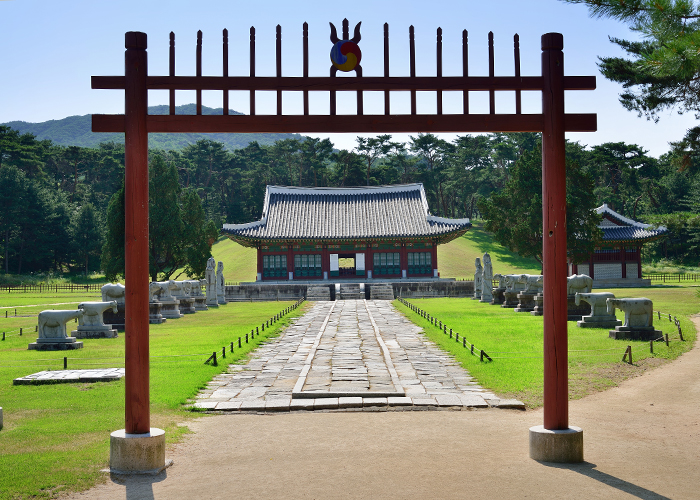
Hongneung
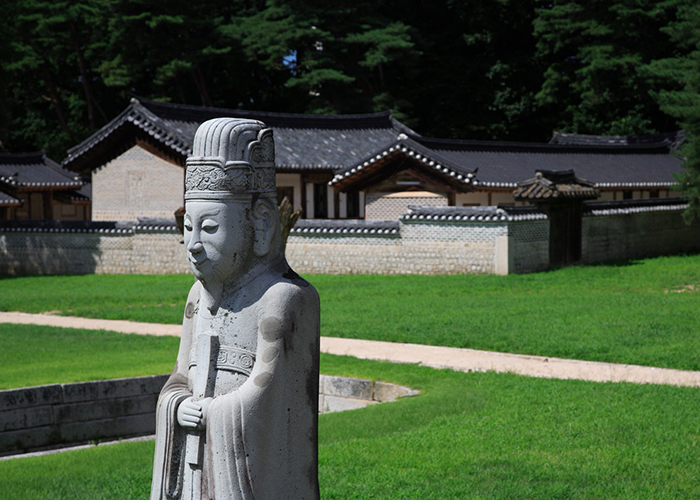
Hongneung
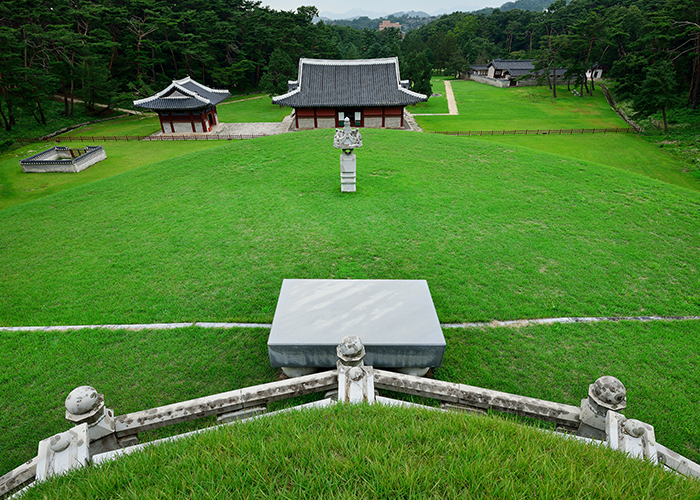
Hongneung
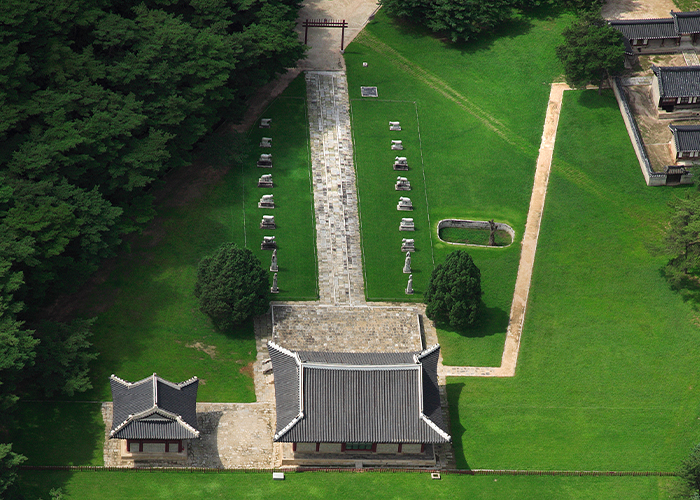
Yureung
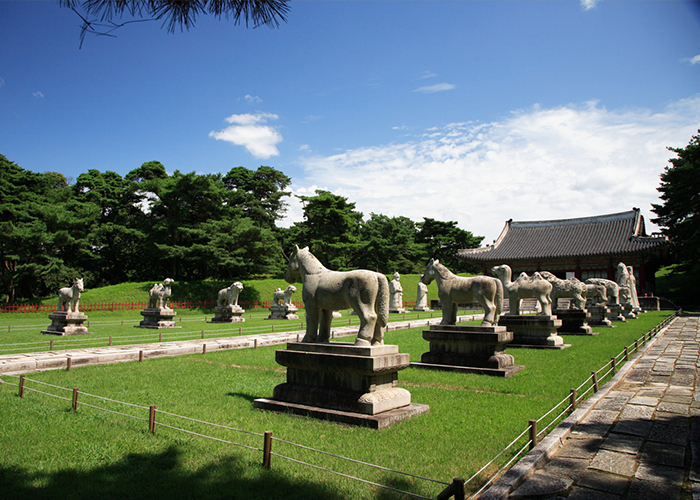
Yureung
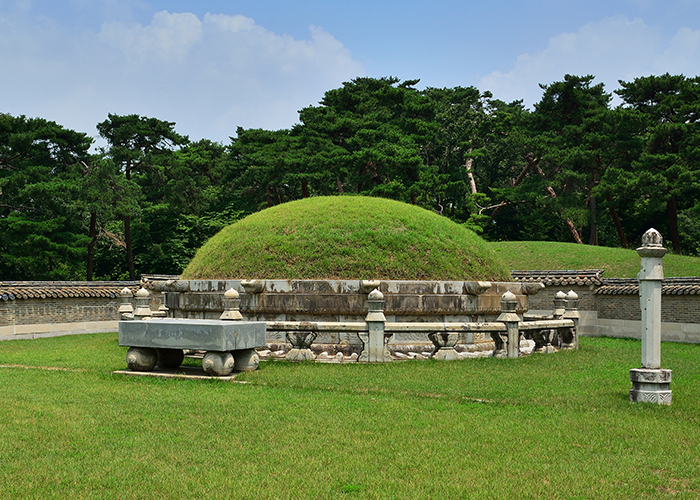
Yureung
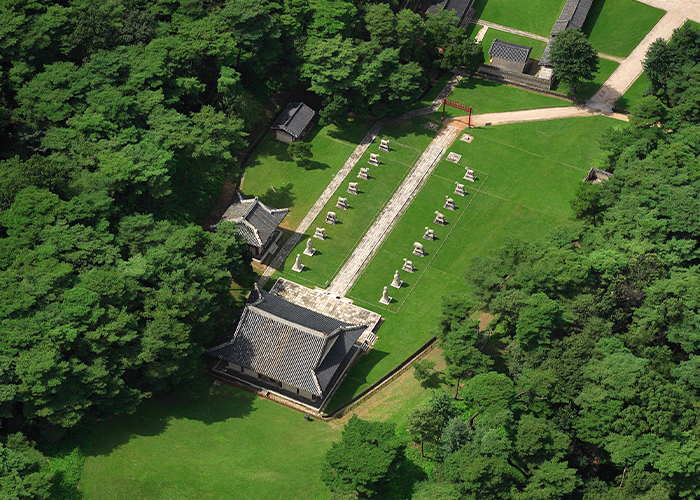
Yureung
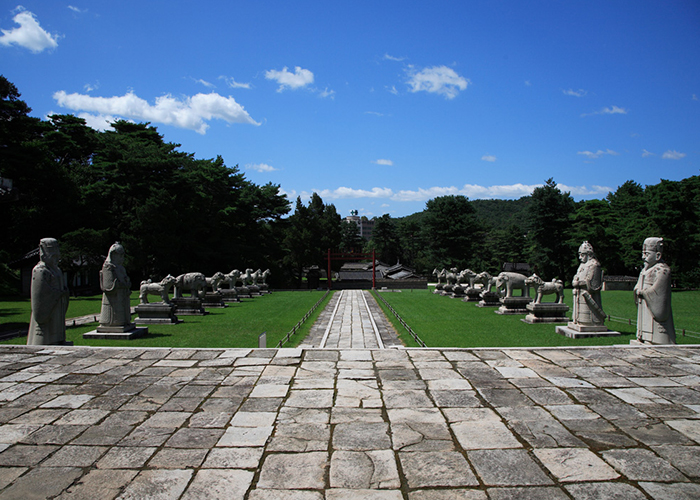
Resting Location for the emperor and empress of the Korean Empire
- Location
- 352-1 Hongyureung-ro, Namyangju-si, Gyeonggi-do
- About the royal tombs
-
· Hongneung (洪陵)
· Yureung (裕陵)
- Program
-
· Convergence Content ‘Garden of The Gods’
· Experience satisfying the five senses of the royal tomb ‘Forest of the Royal Tomb’
· The Royal TombsNight Stars Travel ‘Walking around the royal tombs under the stars’”
Hongyureung was built in the format of the royal tombs of the Korean Empire, not the existing royal tombs of the Joseon Dynasty. King Gojong, who claimed the Korean Empire in 1897, referenced the examples of the Ming Dynasty emperor tombs and inherited the examples of the existing Joseon royal tombs and made a new type of emperor tombs. The difference from the existing Joseon royal tombs is that the Munseok-in and Wuseok-in in the tomb were Locationd in front of the ancestral hall, and the sheep and tiger stones were reLocationd with giraffes, elephants, lions, haetai, and camels. Also, the square angle of the ancestral hall was changed to a settling. In addition to the tombs of King Gojong and Sunjong, Hongyureung is also the Location where the royal family of the Korean Empire rested, including Crown Prince Uimin (King Yeongchin), King Uichin, and Princess Deokhye. Also, the square angle of the ancestral hall was changed to a settling.
Introduction To Tomb of Royal View more
- A. Hongneung (洪陵)
- Form of Tomb : Hapjangreung
- The Formation of The Tomb: 1900 (Gwangmu 4), 1919
- Hongneung is the tomb of King Gojong, the 26th king of the Joseon Dynasty and the first emperor of the Korean Empire, and Empress Myeongseong Min. In one tomb, King Gojong and Empress Myeongseong were enshrined together. During his reign, King Gojong opened his doors to keep pace with the world situation and established diplomatic ties with Western countries, In 1897, the Korean Empire was claimed to achieve national status equal to that of the world powers.
- B. Yureung (裕陵)
- Form of tomb : Hapjangreung
- The Formation of the Tomb: Neung's 1926, 1966
- Yureung is the tomb of Empress Sunmyeong, who was determined to be the second emperor of the Korean Empire, and the two empresses, Empress Sunjeong, Yun. Sunjong ascended the throne in 1907, but suffered the misfortune of losing the sovereignty of the country to the Japanese in 1910.
Hong Yu-reung Program
Convergence content
‘Garden of the Gods’
- Date
- 9. 24. (Sat) ~ 25. (Sun) 19:30 ~ 20:20
- Number of Spectators
- 800 people per episode (Advance reservation - Maximum of 4 per person, First-come-first-served basis)
The Royal Tombs Satisfying the Five Senses
'Forest of the Royal Tombs(ForRest)'
- Date
- 9. 24. (Sat) ~ 10.7. (Fri) / Every Saturday and Sunday 10:00-17:00
*Time varies by program
- Participants
- Varies by program (Advance reservation, some charges apply)
Hongyureung Night Tour
‘Emperor's garden with lights and dream’
- Date
- 10. 1.(Sat) ~ 10. 16.(Sun), Every Saturday and Sunday 19:00~21:00
- Number of Spectators
- 300 per day (Advance reservation - Maximum 2 per person, First-come-first-served basis)
Directions
- Tel
- (031) 591-7043
- Public Transport
-
- Get off at Geumgok Station on the Gyeongchun Line (15 minutes on foot)
- Gangbyeon Station, Subway Line 2, Exit 4, Gangbyeon Station Bus Stop A: Use Bus No. 93
- Subway Line 5 Gangdong Station Exit 4 Jungang Bus Stop: Use Bus Nos. 1-4 or 23
- Gyeongui Jungang Line Donong Station Exit 2 Jungang Bus Stop: Take Bus No. 1-4, 23, 30, 93, or 65
※ Bus stop name: Lee Seokyeong Square, Hongyureung, Geumgok-dong Community Service Center, Namyangju Juyong Welfare Plus Center
- Jamsil Station on Lines 2 and 8 (underground): Take Bus No. 1000, 1200, or 1200-1
- Cheongnyangni Hyundai Core: Take Bus Nos. 330-1, 1330-2, 1330-3, 1330-4, 1330-44
※ Bus stop name: Hongyureung, Lee Seokyeong Square, Namyangju Juyong Welfare Plus Center
- Car
-
- Seoul Outer Ring Road → Namyangju IC → National Road No. 46 toward Chuncheon → Hongyureung
- Gangbyeonbuk-ro → Guri → National Road No. 46 toward Chuncheon → Hongyureung